Florida-first · Escape tiny homes · ADUs & backyard builds · Communities · Homestead tools
Prefab · tiny · homestead
You're in: Guides & tools
The Architecture of High Performance Container Engineering
Engineering a Florida container ADU from Corten shell to monolithic vapor barrier, ERV ventilation, EarthNest landscape integration, and FBC-stamped structural reinforcement.
When you browse social media for tiny home inspiration, it is impossible to ignore the shipping container home. These massive, corrugated steel boxes are visually striking—rugged, industrial, and appealing to minimalists and off-grid enthusiasts alike.
At Prefabricated.co, we approach alternative building materials with an engineering-first mindset. A raw steel ISO shipping container is not a house. Left unmodified, it is a harsh environment—a steel oven in the Florida summer and a condensation trap during a winter cold snap.
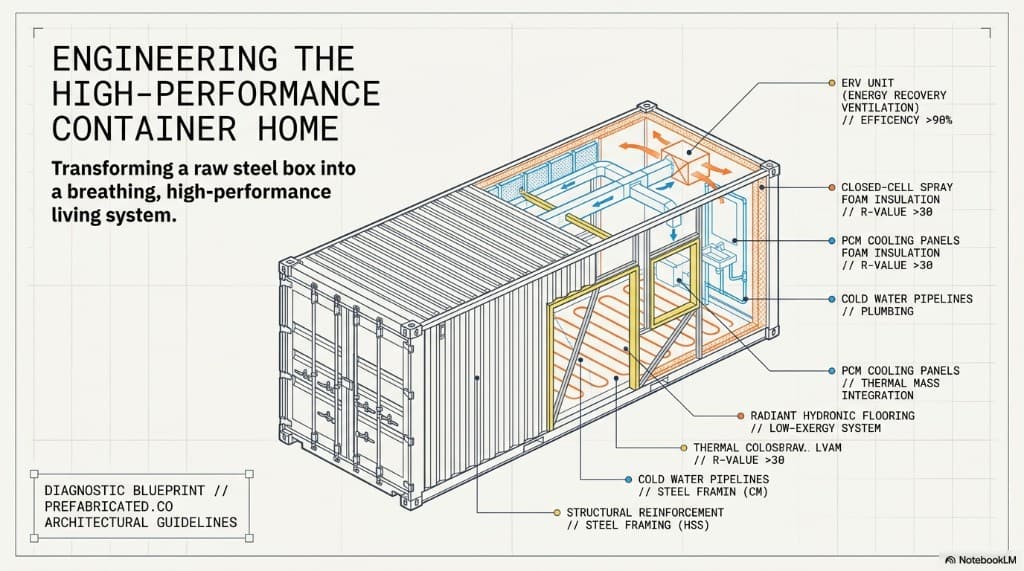
To utilize these durable structures for a backyard Accessory Dwelling Unit (ADU) or standalone tiny home, you must execute precise architectural modifications. This guide breaks down how a rigid steel container becomes a breathing, high-performance living system—part of our EarthNest Systems series, following low-waste plumbing and processing hubs.
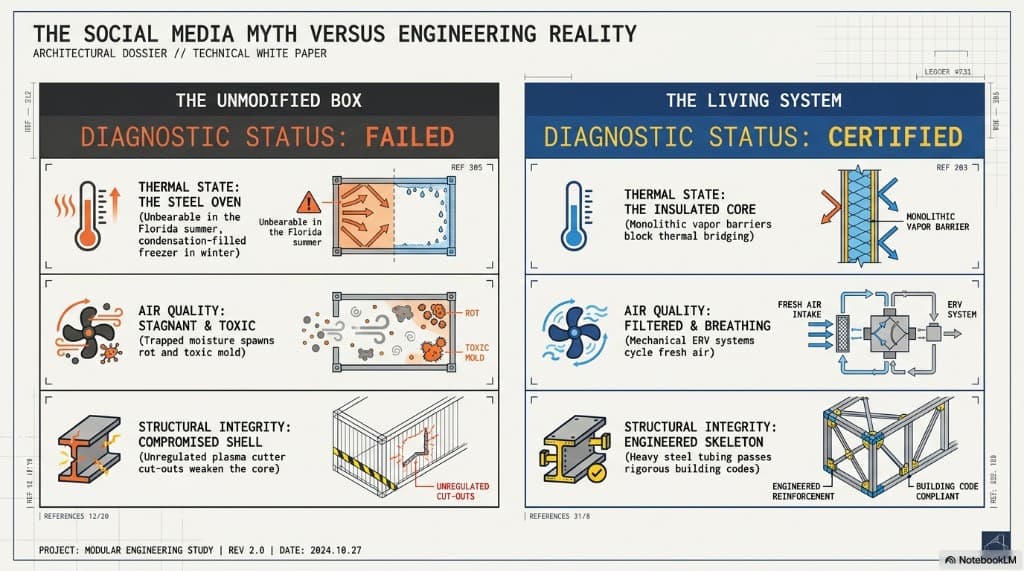
Social media myth versus engineering reality
Container content online rarely shows stamped engineering, vapor control, or mechanical ventilation. The gap between aesthetic photos and permitted performance is where projects fail inspections—or fail silently with mold.
The ultimate structural shell
Before diving into modifications, acknowledge why containers are appealing. A standard Corten steel shipping container is engineered to hold tens of thousands of pounds of cargo, withstand corrosive saltwater, and stack on cargo ships in heavy seas.
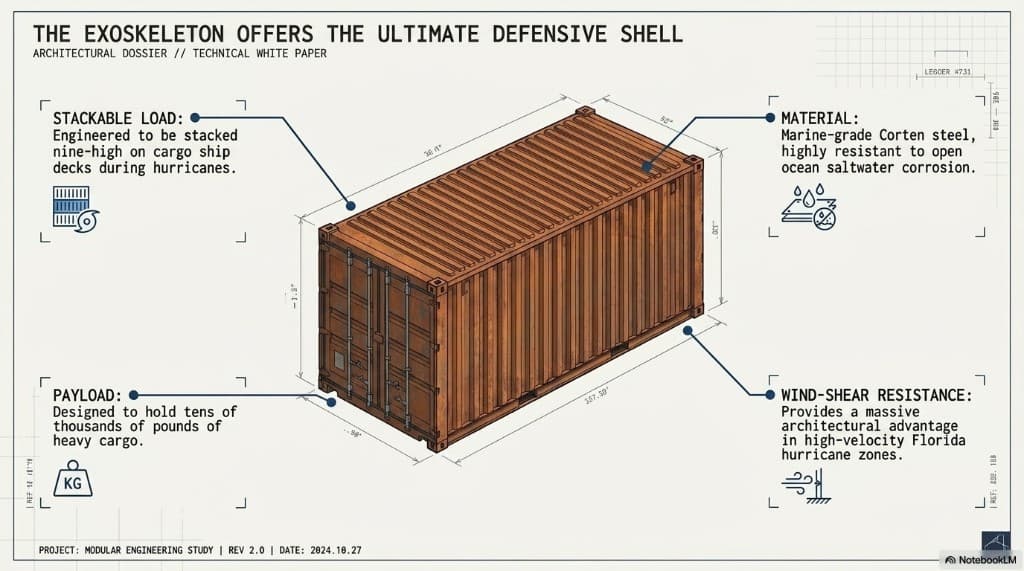
For Florida residents in high-velocity hurricane zones, the wind resistance of a properly anchored steel shell is a genuine architectural advantage—provided the unit is tied down to an engineered foundation system per FBC uplift requirements, not merely dropped on blocks. The container is a defensive structural line—but habitable living requires conquering its greatest weakness: thermal conductivity.
Steel moves heat fast. In summer, unmodified boxes become uninhabitable without shade, insulation, and mechanical cooling.
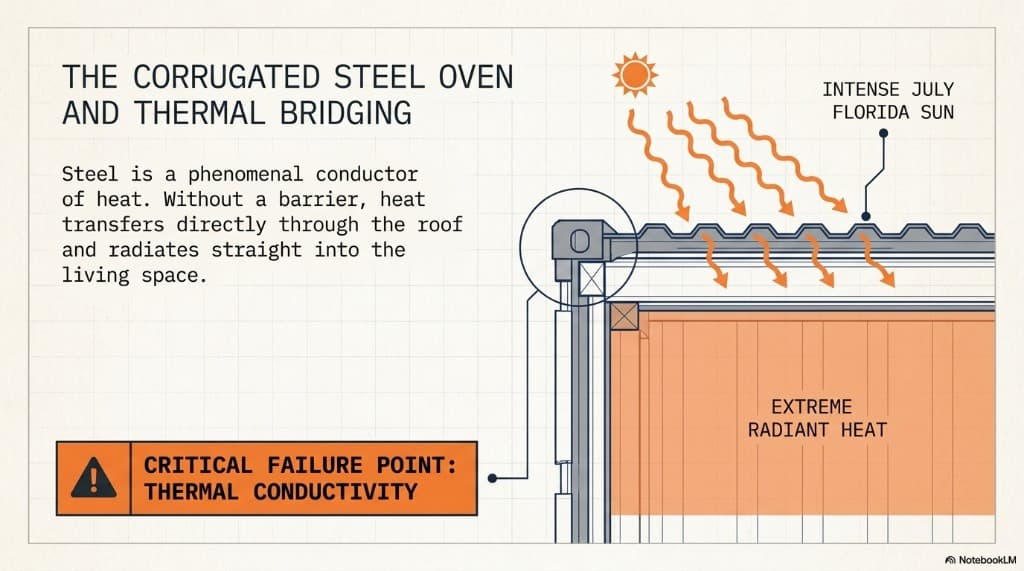
In winter cold snaps, interior surfaces can drop below dew point and sweat. The design goal is a sealed, conditioned envelope that plugs into regenerative landscape systems instead of fighting the climate raw.
Mastering the thermal envelope
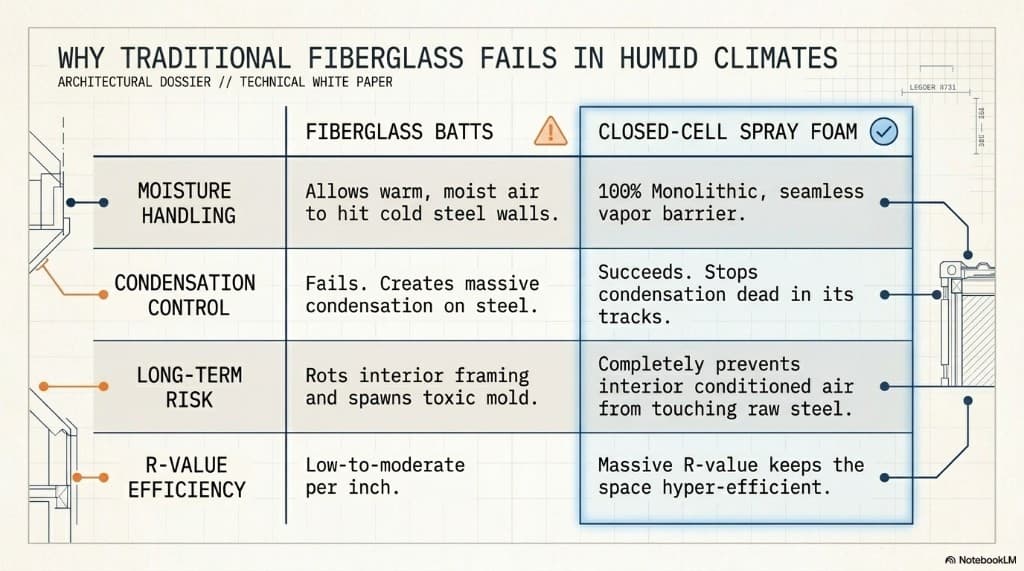
If the July sun beats on an unmodified roof, heat transfers straight through the steel into the living space. Standard fiberglass batts fail in this scenario: warm, moist interior air hits cold steel, condensation forms, framing rots, and mold follows.
The closed-cell solution
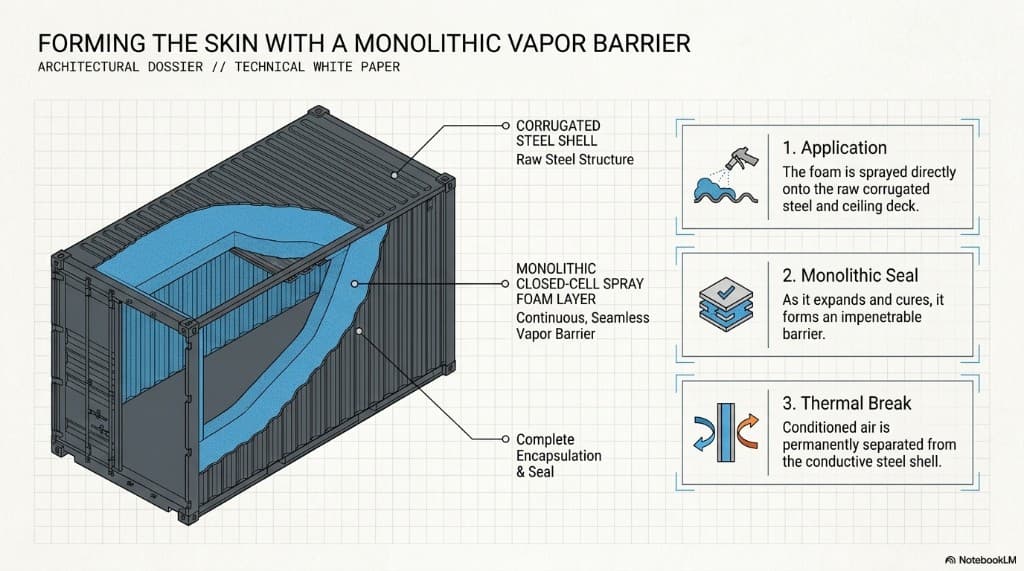
In humid climates, the baseline approach is closed-cell spray foam insulation applied directly to corrugated steel:
- Foam expands and cures against walls and ceiling deck.
- It forms a continuous monolithic vapor barrier.
- Interior conditioned air does not contact raw steel—condensation is interrupted while R-value keeps cooling loads manageable.
This pairs with the same efficiency-first logic we use across Florida ADUs: reduce loads before you add generation. A tight container shell makes mini-split HVAC and future solar sizing realistic instead of heroic.
40% shade cloth (10 x 20 ft)
→ Shop / view productPenetration and ventilation: letting the system breathe
Once insulated and sealed, a container behaves like an airtight cooler. Without mechanical fresh air, CO₂, humidity, and cooking odors accumulate.
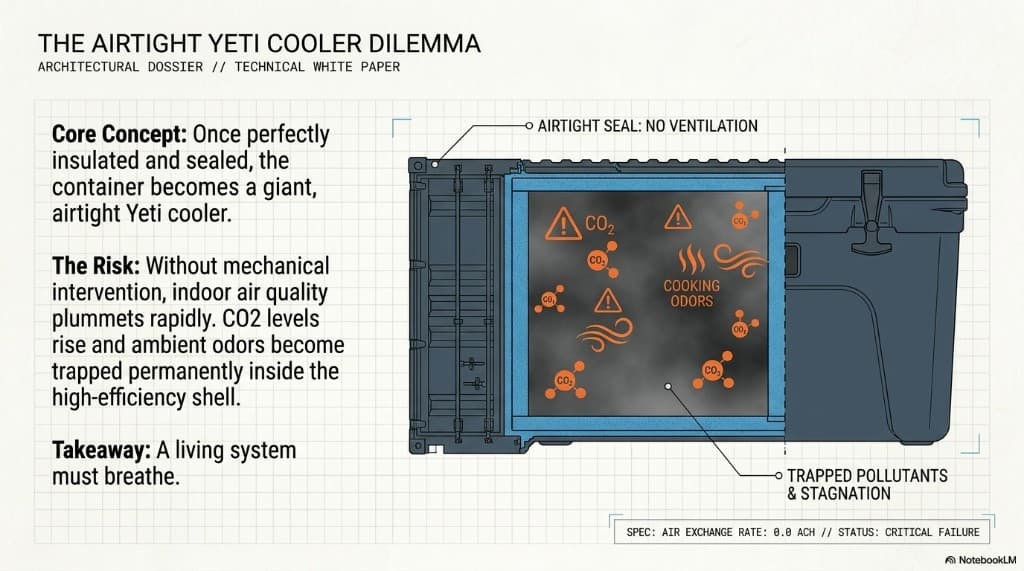
A living system must breathe. High-performance container homes integrate an energy recovery ventilator (ERV):
- Continuously exhausts stale indoor air while supplying filtered outdoor air.
- Transfers cool, dry energy from the exhaust stream to incoming hot, humid Florida air in the heat exchanger core.
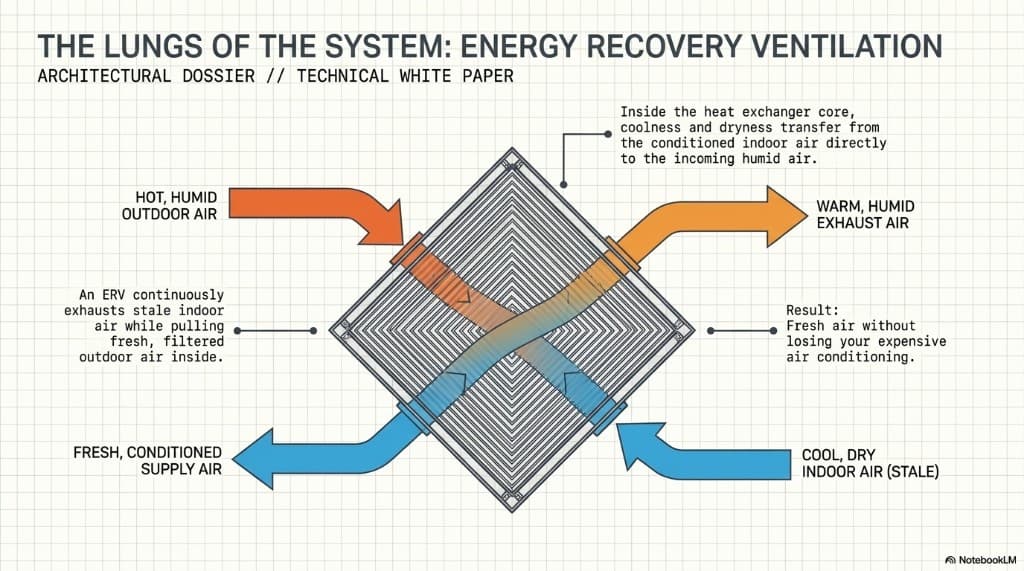
You gain constant fresh air without throwing away expensive conditioning—a critical pairing with spray-foam tightness in the subtropics. For the psychrometric reality of Florida humidity, treat moisture as the primary enemy; envelope design is climate design. Many container conversions pair ERVs with ductless mini-split HVAC sized for the reduced load of a properly foamed box.
Integrating with the landscape
To realize the EarthNest model, the container should not sit isolated on a pad—it must connect to permaculture infrastructure on the lot.
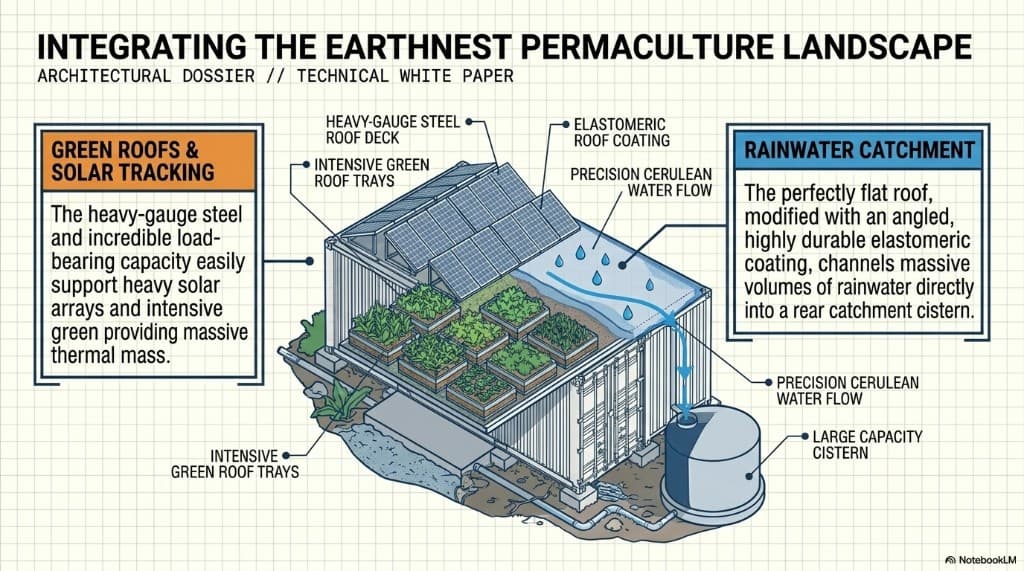
Flat, steel roofs are platforms for regenerative systems:
- Rainwater catchment: Durable elastomeric coatings and careful pitch can channel roof runoff into cistern storage—the same catchment math we use for modular ADU rooflines.
- Solar arrays: Load-rated roofs can host PV when demand has been minimized inside the shell.
- Green roof mass: Where engineering allows, living roof layers add insulation and storm buffering.
Windows and doors deserve the same discipline as insulation: thermally broken frames, flashed penetrations, and overhangs that keep summer sun off the steel rib. Every cut is a thermal bridge until it is detailed correctly on the plan set.
Route overflow and graywater from the low-waste systems into mulched basins and food-forest edges so the shell and soil work as one system.
Water storage tank / cistern
→ Shop / view productThe permitting reality check
Transforming a container into a living system is an engineering feat—and a legal one. Many Florida municipalities scrutinize container conversions heavily.
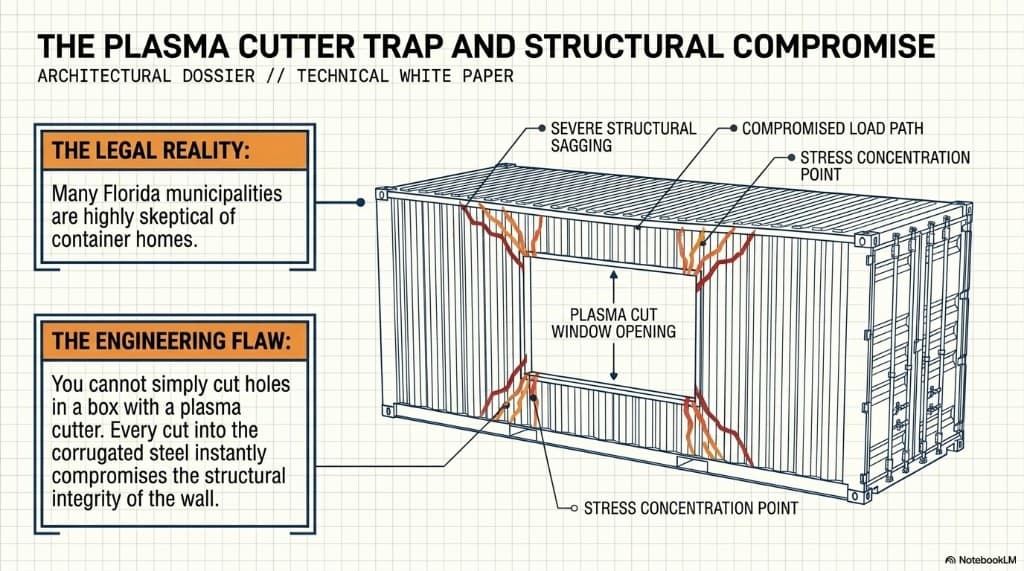
To pass inspections and secure a Certificate of Occupancy, you cannot casually cut openings with a plasma torch. Every window and door cut compromises wall capacity. Projects require site-specific structural plans stamped by a Florida-licensed Professional Engineer, detailing reinforcement with steel tubing and connections that meet the Florida Building Code (FBC) wind-load and impact requirements for your jurisdiction.
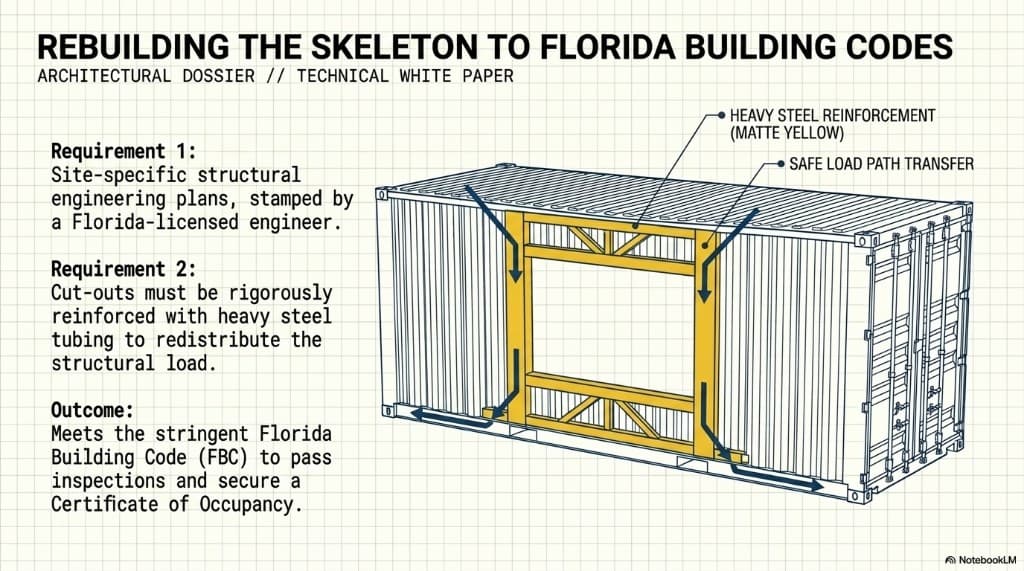
Zoning may be stricter than structure: special exceptions, homestead rules, and HOA covenants still apply. Start with county ADU rules and a free property evaluation before you purchase a container or commission shop drawings.
Compare container conversion against factory-built shells in our Escape tiny home catalog when speed-to-weathertight and standardized engineering matter more than DIY steel work. Either path can anchor an EarthNest site—the envelope choice should follow jurisdiction, timeline, and who holds the PE stamp.
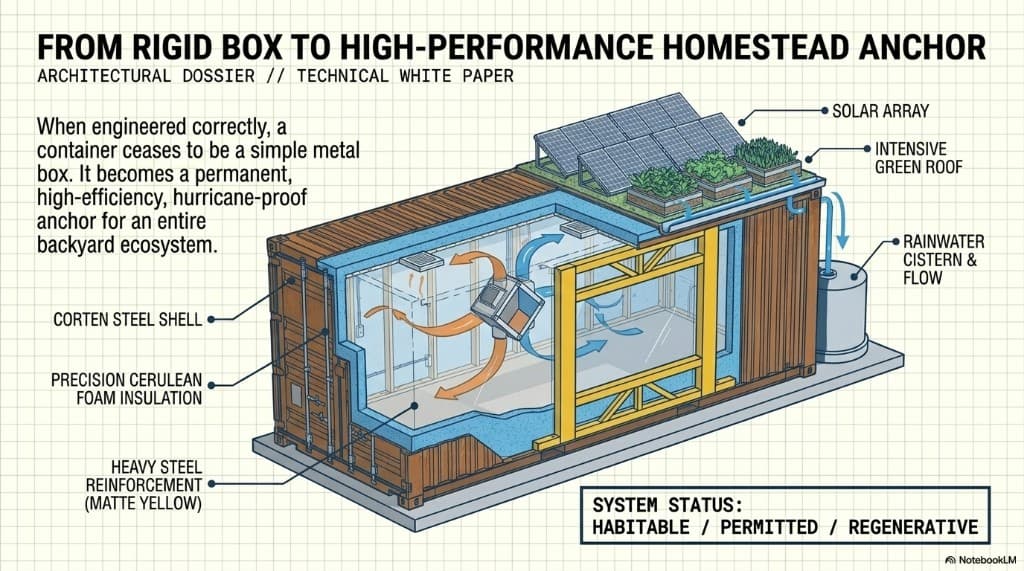
When engineered and permitted correctly, a container ceases to be a metal box. It becomes a permanent, high-efficiency anchor for a backyard homestead—shell on the outside, living system on the inside and in the landscape around it.
Next in the EarthNest Systems series: [Backyard Homesteading for Small Lots](/blog/backyard-homesteading-small-lots-florida)—permaculture zone mapping, compact agricultural layout, and horizontal and vertical spacing for Florida parcels.
Download the Florida ADU Starter Kit
Municipal checklists, feasibility prompts, and next-step framing—free before you talk to a builder.
Get the starter kit